
Just two years from now, on Monday, August 21, 2017, the Moon's shadow will sweep across the United States at a speed of over 2,000 km/hr. The Great American Eclipse of 2017 will generate a frenzy of activity. [TM074: search for “thatsmaths” at irishtimes.com ]. Solar eclipses are not especially rare, but this one is of … Continue reading The Great American Eclipse
Category: Irish Times
Articles in Irish Times
The Bridges of Paris
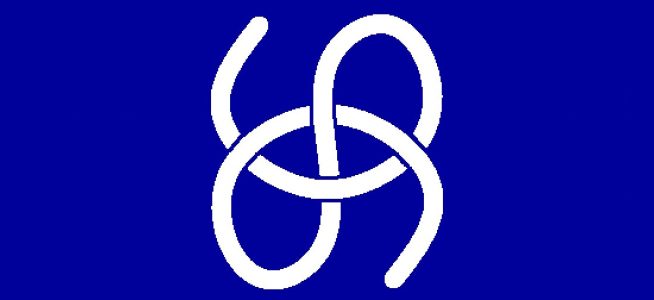
Leonhard Euler considered a problem known as The Seven Bridges of Königsberg. It involves a walk around the city now known as Kaliningrad, in the Russian exclave between Poland and Lithuania. Since Kaliningrad is out of the way for most of us, let's have a look closer to home, at the bridges of Paris. [TM073: … Continue reading The Bridges of Paris
Pluto’s Unruly Family
An astrodynamical miracle is happening in the sky above. Our ability to launch a space-probe from the revolving Earth to reach a moving target billions of kilometres away almost ten years later with pinpoint accuracy is truly astounding. "New Horizons" promises to enhance our knowledge of the solar system and it may help us to … Continue reading Pluto’s Unruly Family
Emmy Noether’s beautiful theorem
The number of women who have excelled in mathematics is lamentably small. Many reasons may be given, foremost being that the rules of society well into the twentieth century debarred women from any leading role in mathematics and indeed in science. But a handful of women broke through the gender barrier and made major contributions. … Continue reading Emmy Noether’s beautiful theorem
The Tragic Demise of a Beautiful Mind
John Nash, who was the subject of the book and film A Beautiful Mind, won the Abel Prize recently. But his journey home from the award ceremony in Norway ended in tragedy [see this week’s That’s Maths column (TM069): search for “thatsmaths” at irishtimes.com]. We learn at school how to solve polynomial equations of first … Continue reading The Tragic Demise of a Beautiful Mind
Mercator’s Marvellous Map
Try to wrap a football in aluminium foil and you will discover that you have to crumple up the foil to make it fit snugly to the ball. In the same way, it is impossible to represent the curved surface of the Earth on a flat plane without some distortion. [See this week’s That’s Maths … Continue reading Mercator’s Marvellous Map
Modelling the Markets
Mathematics now plays a fundamental role in modelling market movements [see this week’s That’s Maths column (TM067) or search for “thatsmaths” at irishtimes.com]. The state of the stock market displayed on a trader's screen is history. Big changes can occur in the fraction of a second that it takes for information to reach the screen. … Continue reading Modelling the Markets
For Good Comms, Leaky Cables are Best
A counter-intuitive result of Oliver Heaviside showed how telegraph cables should be designed [see this week’s That’s Maths column (TM066) or search for “thatsmaths” at irishtimes.com]. Robert Halpin In Wicklow town an obelisk commemorates Robert Halpin, a Master Mariner born at the nearby Bridge Tavern. Halpin, one of the more important mariners of the nineteenth … Continue reading For Good Comms, Leaky Cables are Best
Mode-S: Aircraft Data improves Weather Forecasts
A simple application of vectors yields valuable new wind observations for weather forecasting [see this week’s That’s Maths column (TM065) or search for “thatsmaths” at irishtimes.com]. It has often happened that an instrument designed for one purpose has proved invaluable for another. Galileo observed the regular swinging of a pendulum. Christiaan Huygens derived a mathematical … Continue reading Mode-S: Aircraft Data improves Weather Forecasts
You Can Do Maths
Bragging about mathematical ineptitude is not cool. There is nothing admirable about ignorance and incompetence. Moreover, everyone thinks mathematically all the time, even if they are not aware of it. Can we all do maths? Yes, we can! [See this week’s That’s Maths column (TM064) or search for “thatsmaths” at irishtimes.com]. We use simple arithmetic … Continue reading You Can Do Maths
Café Mathematics in Lvov
For 150 years the city of Lvov was part of the Austro-Hungarian Empire. After Polish independence following World War I, research blossomed and between 1920 and 1940 a sparkling constellation of mathematicians flourished in Lvov [see this week’s That’s Maths column in The Irish Times (TM063, or search for “thatsmaths” at irishtimes.com). Zygmunt Janeszewski, who … Continue reading Café Mathematics in Lvov
MGP: Tracing our Mathematical Ancestry
There is great public interest in genealogy. Many of us live in hope of identifying some illustrious forebear, or enjoy the frisson of having a notorious murderer somewhere in our family tree. Academic genealogies can also be traced: see this week’s That’s Maths column in The Irish Times (TM062, or search for “thatsmaths” at irishtimes.com). … Continue reading MGP: Tracing our Mathematical Ancestry
Perelman’s Theorem: Who Wants to be a Millionaire?
This week’s That’s Maths column in The Irish Times (TM061, or search for “thatsmaths” at irishtimes.com) is about the remarkable mathematician Grisha Perelman and his proof of a one-hundred year old conjecture. Topology During the twentieth century topology emerged as one of the pillars of mathematics, alongside algebra and analysis. Geometers consider lengths, angles and … Continue reading Perelman’s Theorem: Who Wants to be a Millionaire?
Barcodes and QR Codes: Zebra stripes and Leopard spots
Barcodes and QR codes are described in this week’s That’s Maths column in The Irish Times (TM060, or search for “thatsmaths” at irishtimes.com). Virtually everything that you buy in your local supermarket has a curious little zebra-like pattern the size of a postage stamp printed on it. Barcodes, originally devised about forty years ago to … Continue reading Barcodes and QR Codes: Zebra stripes and Leopard spots
Information Theory
That’s Maths in The Irish Times this week (TM059, or Search for “thatsmaths” at irishtimes.com) is about data compression and its uses in modern technology. The arrival of mobile phones was followed rapidly by "txtese", an abbreviation of language to enable messages to be written and transmitted rapidly using SMS (Short Message Service). The simplest … Continue reading Information Theory
The Year of George Boole
This week’s That’s Maths column in The Irish Times (TM058, or search for “thatsmaths” at irishtimes.com) is about George Boole, the first Professor of Mathematics at Queen's College Cork. Mathematician and logician George Boole died just 150 years ago, on 8 December 1864, following a drenching as he was walking between his home and Queen's … Continue reading The Year of George Boole
Earth’s Shape and Spin Won’t Make You Thin
Using a simple pendulum we can determine the shape of the Earth. That amazing story is told in this week’s That’s Maths column in The Irish Times (TM057 or search for “thatsmaths” at http://www.irishtimes.com ). Many of us struggle to lose weight, or at least to keep our weight within a manageable range. There is no … Continue reading Earth’s Shape and Spin Won’t Make You Thin
El Niño likely this Winter
This week’s That’s Maths column in The Irish Times (TM056 or search for “thatsmaths” at irishtimes.com) is about El Niño and the ENSO phenomenon. In 1997-98, abnormally high ocean temperatures off South America caused a collapse of the anchovy fisheries. Anchovies are a vital link in the food-chain and shortages can bring great hardship. Weather … Continue reading El Niño likely this Winter
Old Octonions may rule the World
This week’s That’s Maths column in The Irish Times (TM055, or search for “thatsmaths” at irishtimes.com) is about octonions, new numbers discovered by John T Graves, a friend of William Rowan Hamilton. On this day in 1843, the great Irish mathematician William Rowan Hamilton discovered a new kind of numbers called quaternions. Each quaternion has … Continue reading Old Octonions may rule the World
Algebra in the Golden Age
This week’s That’s Maths column in The Irish Times (TM054, or search for “thatsmaths” at irishtimes.com) is about the emergence of algebra in the Golden Age of Islam. The Chester Beatty Library in Dublin has several thousand Arabic manuscripts, many on mathematics and science. "The ink of a scholar is holier than the blood of … Continue reading Algebra in the Golden Age
How Big was the Bomb?
By a brilliant application of dimensional analysis, G.I.Taylor estimated the explosive energy of the first atomic blast, the Trinity Test (see this week’s That’s Maths column in The Irish Times, TM053, or search for “thatsmaths” at irishtimes.com). Physicists, engineers and applied mathematicians have an arsenal of problem-solving techniques. Computers crunch out numerical solutions in short … Continue reading How Big was the Bomb?
The Biggest Harp in Ireland
This week’s That’s Maths column in The Irish Times (TM052, or search for “thatsmaths” at irishtimes.com) is about "Samuel Beckett Playing Bridge in Dublin". Mathematics Models Nature The life of Pythagoras is shrouded in myth and legend. He was born on the island of Samos and travelled to Egypt, Mesopotamia and possibly India before arriving … Continue reading The Biggest Harp in Ireland
Biomathematics: the New Frontier
Mathematics is coming to Life in a Big Way. This week's That’s Maths in The Irish Times (TM051, or Search for “thatsmaths” at irishtimes.com) is about the increasing importance of mathematics in the biological sciences. Once upon a time biology meant zoology and botany, the study of animals and plants. The invention of the microscope … Continue reading Biomathematics: the New Frontier
“Come See the Spinning Globe”
That’s Maths in The Irish Times this week (TM050, or Search for “thatsmaths” at irishtimes.com) is about how a simple pendulum can demonstrate the rotation of the Earth. Spectators gathered in Paris in March 1851 were astonished to witness visible evidence of the Earth's rotation. With a simple apparatus comprising a heavy ball swinging on … Continue reading “Come See the Spinning Globe”
Digital Dentistry
That’s Maths in The Irish Times this week (TM049, or Search for “thatsmaths” at irishtimes.com) is about applications of computer aided design and computer aided manufacture to making dental crowns. Next time you spot a kid immersed in a video game, pause before uttering a condemnatory remark. The spin-offs from computer gaming are benefiting us … Continue reading Digital Dentistry
Beauty is the First Test
This week, That’s Maths in The Irish Times (TM048: Search for "thatsmaths" at irishtimes.com) is about the beauty of mathematics. “Beauty is truth, truth beauty” wrote John Keats in his Ode on a Grecian Urn. Mathematical theorems have an enduring truth and the truly great ones are profoundly beautiful. Proofs of theorems can be technically … Continue reading Beauty is the First Test
When did Hammurabi reign?
The consequences of the Earth’s changing climate may be very grave. It is essential to understand past climate change so that we can anticipate future changes. This week, That’s Maths in The Irish Times ( TM047 ) is about the chronology of the Middle East. Surprisingly, this has important implications for our understanding of climate … Continue reading When did Hammurabi reign?
Sunflowers and Fibonacci: Models of Efficiency
The article in this week’s That’s Maths column in The Irish Times ( TM046 ) is about the maths behind the efficient packing of sunflowers and many other plants Strolling along Baggot Street in Dublin recently, I noticed a plaque at the entrance to the Ibec head office. It showed a circular pattern of dots, … Continue reading Sunflowers and Fibonacci: Models of Efficiency
The Future of Society: Prosperity or Collapse?
The article in this week’s That’s Maths column in the Irish Times ( TM045 ) is about a mathematical model to simulate the future of society. Our extravagant lifestyle is draining the Earth's natural resources. Population is climbing and climate change looms ever larger. Is the collapse of society imminent? The historical precedents are ominous. Many civilizations … Continue reading The Future of Society: Prosperity or Collapse?
The Faraday of Statistics
This week, That’s Maths in The Irish Times ( TM044 ) is about the originator of Students t-distribution. In October 2012 a plaque was unveiled at St Patrick's National School, Blackrock, to commemorate William Sealy Gosset, who had lived nearby for 22 years. Sir Ronald Fisher, a giant among statisticians, called Gosset “The Faraday of … Continue reading The Faraday of Statistics
Clothoids Drive Us Round the Bend
The article in this week’s That’s Maths column in the Irish Times ( TM043 ) is about the mathematical curves called clothoids, used in the design of motorways. * * * Next time you travel on a motorway, take heed of the graceful curves and elegant dips and crests of the road. Every twist and … Continue reading Clothoids Drive Us Round the Bend
The Predictive Power of Maths
This week, That’s Maths in The Irish Times ( TM042 ) is about the remarkable capacity of mathematics to anticipate physical phenomena that have not yet been observed. The mathematical equations that express the laws of physics describe phenomena seen in the real world. But they also allow us to anticipate completely new phenomena. * … Continue reading The Predictive Power of Maths
The Unity of Mathematics
This week, That’s Maths in The Irish Times ( TM041 ) is about an ambitious program to unify mathematics. Mathematics expands! Results once proven to be true remain forever true. They are not displaced by subsequent results, but absorbed in an ever-growing theoretical web. Thus, it is increasingly difficult for any individual mathematician to have … Continue reading The Unity of Mathematics
Simulating the Future Climate
The Earth's climate is changing, and the consequences may be very grave. This week, That’s Maths in The Irish Times ( TM040 ) is about computer models for simulating and predicting the future climate. Liffey Bursts its Banks: St. Stephen's Green Flooded Again The above is an improbable but not entirely impossible future headline. Sea … Continue reading Simulating the Future Climate
Euclid in Technicolor
The article in this week’s That’s Maths column in the Irish Times ( TM039 ) is about Oliver Byrne's amazing technicolor Elements of Euclid, recently re-published by Taschen. Oliver Byrne (1810–1890), a Victorian civil engineer, was a prolific writer on science. He published more than twenty books on mathematics and several more on mechanics. The … Continue reading Euclid in Technicolor
Speed Cubing & Group Theory
The article in this week’s That’s Maths column in the Irish Times ( TM038 ) is about Rubik's Cube and the Group Theory that underlies its solution. The Rubik's cube craze ran through the world like wildfire in the 1980s. This simple mechanical puzzle is made from small pieces, called “cubies”, in a 3x3x3 structure … Continue reading Speed Cubing & Group Theory
Robots & Biology
The article in this week’s That’s Maths column in the Irish Times ( TM037 ) is about connections between robotics and biological systems via mechanics. The application of mathematics in biology is a flourishing research field. Most living organisms are far too complex to be modelled in their entirety, but great progress is under way … Continue reading Robots & Biology
Interesting Bores
This week’s That’s Maths column in the Irish Times ( TM036 ) is about bores. But don't be put off: they are very interesting. According to the old adage, water finds its own level. But this is true only in static situations. In more dynamic circumstances where the water is moving rapidly, there can be … Continue reading Interesting Bores
Santa’s Fractal Journey
The article in this week’s That’s Maths column in the Irish Times ( TM035 ) is about the remarkable Christmas Eve journey of Santa Claus. Dimensions & Fractals How far must Santa travel on Christmas Eve? At a broad scale, he visits all the continents. In more detail he travels to every country. Zooming in, … Continue reading Santa’s Fractal Journey
Population Projections
The Population Division of the United Nations marked 31 October 2011 as the "Day of Seven Billion". While that was a publicity gambit, world population is now above this figure and climbing. The global ecosystem is seriously stressed, and climate change is greatly aggravated by the expanding population. Accurate estimates of growth are essential for … Continue reading Population Projections
The Antikythera Mechanism
The article in this week's That's Maths column in the Irish Times ( TM033 ) is about the Antikythera Mechanism, which might be called the First Computer. Two Storms Two storms, separated by 2000 years, resulted in the loss and the recovery of one of the most amazing mechanical devices made in the ancient world. … Continue reading The Antikythera Mechanism
Euler’s Gem
This week, That’s Maths in The Irish Times ( TM032 ) is about Euler's Polyhedron Formula and its consequences. Euler's Polyhedron Formula The highlight of the thirteenth and final book of Euclid's Elements was the proof that there are just five “Platonic solids”. Recall that a regular polygon is a plane figure with all sides … Continue reading Euler’s Gem
Geometry in and out of this World
Hyperbolic geometry is the topic of the That’s Maths column in the Irish Times this week (TM031 or click Irish Times and search for “thatsmaths”). Living on a Sphere The shortest distance between two points is a straight line. This is one of the basic principles of Euclidean geometry. But we live on a spherical … Continue reading Geometry in and out of this World
The Simpler the Better
This week’s That’s Maths in The Irish Times ( TM030 ) is about Linear Programming (LP) and about how it saves millions of Euros every day through optimising efficiency. A Berkeley graduate student, George Dantzig, was late for class. He scribbled down two problems written on the blackboard and handed in solutions a few days … Continue reading The Simpler the Better
Sonya Kovalevskaya
A brilliant Russian mathematician, Sonya Kovalevskaya, is the topic of the That’s Maths column this week (click Irish Times: TM029 and search for "thatsmaths"). In the nineteenth century it was extremely difficult for a woman to achieve distinction in the academic sphere, and virtually impossible in the field of mathematics. But a few brilliant women managed … Continue reading Sonya Kovalevskaya
Irish Maths Week 2013
This week's That's Maths in The Irish Times ( TM028 ) is all about Maths Week, a major event in the calender of mathematics in Ireland. Over the coming weeks information and announcements about the event will appear on the website for the event (click the logo below): Maths Week, October 2013 With the new … Continue reading Irish Maths Week 2013
The Atmospheric Railway
Atmospheric pressure acting on a surface the size of a large dinner-plate exerts a force sufficient to propel a ten ton train! The That’s Maths column ( TM027 ) in the Irish Times this week is about the atmospheric railway. For more than ten years from 1843 a train without a locomotive plied the 2.8 km … Continue reading The Atmospheric Railway
Admirably Appropriate
The topic of the That’s Maths column ( TM026 ) in the Irish Times this week is the surprising and delightful way in which mathematics developed for its own sake turns out to be eminently suited for solving practical problems. Symbiosis between pure and applied mathematics The power of mathematics is astonishing. Time and again, … Continue reading Admirably Appropriate
Matholympic Heroes
That’s Maths in the Irish Times this week ( TM025 ) is about the International Mathematical Olympiad (IMO), which takes place in Santa Marta, Columbia next week. Every year, bright young students from around the world compete in solving tough mathematical problems. The 54th IMO will be held in Colombia next week and a team … Continue reading Matholympic Heroes
The School of Athens
That's Maths in the Irish Times this week ( TM024: search for "thatsmaths" ) deals with perspective in art and its mathematical expression as projective geometry. The study of geometry evolved from measuring plots of land accurately and from the work of builders and carpenters. So Euclidean geometry emerged from the needs of artisans. Another … Continue reading The School of Athens
 ThatsMaths