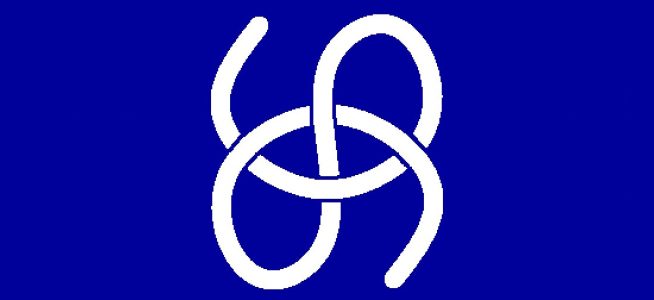

Do you recall coming across those diagrams with overlapping circles that were popularised in the 'sixties', in conjunction with the “New Maths”. They were originally introduced around 1880 by John Venn, and now bear his name. John Venn Venn was a logician and philosopher, born in Hull, Yorkshire in 1834. He studied at Cambridge University, … Continue reading Do you remember Venn?
Category: Occasional
Degrees of Infinity
Many of us recall the sense of wonder we felt upon learning that there is no biggest number; for some of us, that wonder has never quite gone away. It is obvious that, given any counting number, one can be added to it to give a larger number. But the implication that there is no … Continue reading Degrees of Infinity
Invention or Discovery?
Is mathematics invented or discovered? As many great mathematicians have considered this question without fully resolving it, there is little likelihood that I can provide a complete answer here. But let me pose a possible answer in the form of a conjecture: Conjecture: Definitions are invented. Theorems are discovered. The goal is to prove … Continue reading Invention or Discovery?
Gauss’s Great Triangle and the Shape of Space
In the 1820s Carl Friedrich Gauss carried out a surveying experiment to measure the sum of the three angles of a large triangle. Euclidean geometry tells us that this sum is always 180º or two right angles. But Gauss himself had discovered other geometries, which he called non-Euclidean. In these, the three angles of a … Continue reading Gauss’s Great Triangle and the Shape of Space
Balancing a Pencil
Does quantum mechanics matter at everyday scales? It would be very surprising if quantum effects were to be manifest in a macroscopic system. This has been claimed for the problem of balancing a pencil on its tip. But the behaviour of a tipping pencil can be explained in purely classical terms. Modelling a balanced pencil … Continue reading Balancing a Pencil
Biscuits, Books, Coins and Cards: Massive Hangovers
Have you ever tried to build a high stack of coins? In theory it's fine: as long as the centre of mass of the coins above each level remains over the next coin, the stack should stand. But as the height grows, it becomes increasingly trickier to avoid collapse. In theory it is possible to … Continue reading Biscuits, Books, Coins and Cards: Massive Hangovers
The High-Power Hypar
Maths frequently shows us surprising and illuminating connections between physical systems that are not obviously related: the analysis of one system often turns out to be ideally suited for describing another. To illustrate this, we will show how a surface in three dimensional space --- the hyperbolic paraboloid, or hypar --- pops up in unexpected … Continue reading The High-Power Hypar
The Chaos Game
The term "Chaos Game" was coined by Michael Barnsley [1], who developed this ingenious technique for generating mathematical objects called fractals. We have discussed a particular fractal set on this blog: see Cantor's Ternary Set. The Chaos Game is a simple algorithm that identifies one point in the plane at each stage. The sets of … Continue reading The Chaos Game
Predator-Prey Models
Next week's post will be about a model of the future of civilization! It is based on the classical predator-prey model, which is reviewed here. The Lotka-Volterra Model Many ecological process can be modelled by simple systems of equations. An early example of this is the predator-prey model, developed independently by American mathematician Alfred Lotka … Continue reading Predator-Prey Models
Breaking Weather Records
In arithmetic series, like 1 + 2 + 3 + 4 + 5 + … , each term differs from the previous one by a fixed amount. There is a formula for calculating the sum of the first N terms. For geometric series, like 3 + 6 + 12 + 24 + … , each … Continue reading Breaking Weather Records
Rollercoaster Loops
We all know the feeling when a car takes a corner too fast and we are thrown outward by the centrifugal force. This effect is deliberately exploited, and accentuated, in designing rollercoasters: rapid twists and turns, surges and plunges thrill the willing riders. Many modern rollercoasters have vertical loops that take the trains through 360 … Continue reading Rollercoaster Loops
Solar System Perturbations
Remarkable progress in understanding the dynamics of the planets has been possible thanks to their relatively small masses and the overwhelming dominance of the Sun. The figure below shows the relative masses of the Sun, planets and some natural satellites, taking the mass of Earth to be unity. The Sun is one million times more … Continue reading Solar System Perturbations
The Langlands Program
An ambitious programme to unify disparate areas of mathematics was set out some fifty years ago by Robert Langlands of the Institute for Advanced Study in Princeton. The “Langlands Program” (LP) is a set of deep conjectures that attempt to build bridges between certain algebraic and analytical objects. Substantial strides have been made in the … Continue reading The Langlands Program
The Prime Number Theorem
God may not play dice with the Universe, but something strange is going on with the prime numbers [Paul Erdös, paraphrasing Albert Einstein] The prime numbers are the atoms of the natural number system. We recall that a prime number is a natural number greater than one that cannot be broken into smaller factors. Every natural … Continue reading The Prime Number Theorem
French Curves and Bézier Splines
A French curve is a template, normally plastic, used for manually drawing smooth curves. These simple drafting instruments provided innocent if puerile merriment to generations of engineering students, but they have now been rendered obsolete by computer aided design (CAD) packages, which enable us to construct complicated curves and surfaces using mathematical functions called Bézier … Continue reading French Curves and Bézier Splines
Bézout’s Theorem
Two lines in a plane intersect at one point, a line cuts a circle at two points, a cubic (an S-shaped curve) crosses the x-axis three times and two ellipses, one tall and one squat, intersect in four places. In fact, these four statements may or may not be true. For example, two parallel lines … Continue reading Bézout’s Theorem
Pythagorean triples
The Pythagorean theorem states that the square of the hypotenuse of a right triangle is equal to the sum of the squares of the other two sides. It can be written as an equation, a2 + b2 = c2, where c is the length of the hypotenuse, and a and b are the lengths of … Continue reading Pythagorean triples
White Holes in the Kitchen Sink
A tidal bore is a wall of water about a metre high travelling rapidly upstream as the tide floods in. It occurs where the tidal range is large and the estuary is funnel-shaped (see previous post on this blog). The nearest river to Ireland where bores can be regularly seen is the Severn, where favourable … Continue reading White Holes in the Kitchen Sink
Experiment and Proof
Many mathematicians spend their time proving results. The (very old) joke is that they are machines for turning coffee into theorems. A theorem is a statement that has been shown, by a sequence of irrefutable steps, to follow logically from a set of fundamental assumptions known as axioms. These axioms themselves may be self-evident, or … Continue reading Experiment and Proof
Ireland’s Fractal Coastline
Reports of the length of Ireland's coastline vary widely. The World Factbook of the Central Intelligence Agency gives a length of 1448 km. The Ordnance Survey of Ireland has a value of 3,171 km (http://www.osi.ie). The World Resources Institute, using data from the United States Defense Mapping Agency, gives 6,347km (see Wikipedia article [3]). Fractals … Continue reading Ireland’s Fractal Coastline
A Simple Growth Function
Three Styles of Growth Early models of population growth represented the number of people as an exponential function of time, $latex \displaystyle N(t) = N_0 \exp(t/\tau) &fg=000000$ where $latex {\tau}&fg=000000$ is the e-folding time. For every period of length $latex {\tau}&fg=000000$, the population increases by a factor $latex {e\approx 2.7}&fg=000000$. Exponential growth was assumed by … Continue reading A Simple Growth Function
The Watermelon Puzzle
An amusing puzzle appears in a recent book by John A. Adam (2013). The answer is very surprising. The book argues in terms of simultaneous equations. A simpler argument, using the diagram below, should make all clear. The Watermelon Puzzle. A farmer brings a load of watermelons to the market. Before he sets out, he … Continue reading The Watermelon Puzzle
Hyperbolic Triangles and the Gauss-Bonnet Theorem
Poincaré's half-plane model for hyperbolic geometry comprises the upper half plane $latex {\mathbf{H} = \{(x,y): y>0\}}&fg=000000$ together with a metric $latex \displaystyle d s^2 = \frac { d x^2 + d y^2 } { y^2 } \,. &fg=000000$ It is remarkable that the entire structure of the space $latex {(\mathbf{H},ds)}&fg=000000$ follows from the metric. The … Continue reading Hyperbolic Triangles and the Gauss-Bonnet Theorem
Poincare’s Half-plane Model (bis)
In a previous post, we considered Poincaré's half-plane model for hyperbolic geometry in two dimensions. The half-plane model comprises the upper half plane $latex {H = \{(x,y): y>0\}}&fg=000000$ together with a metric $latex \displaystyle d s^2 = \frac { d x^2 + d y^2 } { y^2 } \,. &fg=000000$ It is remarkable that the … Continue reading Poincare’s Half-plane Model (bis)
Poincaré’s Half-plane Model
For two millennia, Euclid's geometry held sway. However, his fifth axiom, the parallel postulate, somehow wrankled: it was not natural, obvious nor comfortable like the other four. In the first half of the nineteenth century, three mathematicians, Bolyai, Lobachevesky and Gauss, independently of each other, developed a form of geometry in which the parallel postulate … Continue reading Poincaré’s Half-plane Model
A Mathematical Dynasty
The idea that genius runs in families is supported by many examples in the arts and sciences. One striking case is the family of Johann Sebastian Bach, the most brilliant star in a constellation of talented musicians and composers. In a similar vein, several generations of the Bernoulli family excelled in science and medicine. More … Continue reading A Mathematical Dynasty
New Estimate of the Speed of Light
A team of German scientists have recently discovered a new method of measuring the speed of light using Einstein's famous equation E = m c2 Scientists from SFZ, the Spätenheim Forschungszentrum in Bavaria, assembled a group of twenty volunteer climbers at a local mountain, Schmerzenberg. Using high-precision Mettler balance equipment, each climber was weighed at … Continue reading New Estimate of the Speed of Light
A Hole through the Earth
“I wonder if I shall fall right through the earth”, thought Alice as she fell down the rabbit hole, “and come out in the antipathies”. In addition to the author of the “Alice” books, Lewis Carroll – in real life the mathematician Charles L. Dodgson – many famous thinkers have asked what would happen if … Continue reading A Hole through the Earth
Ternary Variations
Georg Cantor (1845-1918) was led, through his study of trigonometric series, to distinguish between denumerably infinite sets like the rationals and uncountable sets like the reals. He introduced a set that is an abstract form of what we now call Cantor's Ternary Set. In fact, the ternary set had been studied some ten years earlier … Continue reading Ternary Variations
The remarkable BBP Formula
Information that is declared to be forever inaccessible is sometimes revealed within a short period. Until recently, it seemed impossible that we would ever know the value of the quintillionth decimal digit of pi. But a remarkable formula has been found that allows the computation of binary digits starting from an arbitrary position without the … Continue reading The remarkable BBP Formula
Paddling Uphill
Recently, I kayaked with two friends on the River Shannon, which flows southward through the centre of Ireland. Starting at Dowra, Co. Cavan, we found it easy paddling until we reached Lough Allen, when the going became very tough. It was an uphill struggle. Could we really be going uphill while heading downstream? That seems … Continue reading Paddling Uphill
The Ups and Downs of Hailstone Numbers
Hailstones, in the process of formation, make repeated excursions up and down within a cumulonimbus cloud until finally they fall to the ground. We look at sequences of numbers that oscillate in a similarly erratic manner until they finally reach the value 1. They are called hailstone numbers. The Collatz Conjecture There are many simply-stated … Continue reading The Ups and Downs of Hailstone Numbers
Amazing Normal Numbers
For any randomly chosen decimal number, we might expect that all the digits, 0, 1 , … , 9, occur with equal frequency. Likewise, digit pairs such as 21 or 59 or 83 should all be equally likely to crop up. Similarly for triplets of digits. Indeed, the probability of finding any finite string of … Continue reading Amazing Normal Numbers
Joyce’s Number
With Bloomsday looming, it is time to re-Joyce. We reflect on some properties of a large number occurring in Ulysses. The Largest Three-digit Number What is the largest number that can be written using only three decimal digits? An initial guess might be 999. But soon we realize that factorials permit much greater numbers, and … Continue reading Joyce’s Number
Gauss Misses a Trick
Carl Friedrich Gauss is generally regarded as the greatest mathematician of all time. The profundity and scope of his work is remarkable. So, it is amazing that, while he studied non-Euclidian geometry and defined the curvature of surfaces in space, he overlooked a key connection between curvature and geometry. As a consequence, decades passed before … Continue reading Gauss Misses a Trick
The Sholders of Giants
Isaac Newton gave credit to his predecessors for his phenomenal vision and insight with the phrase that he was “standing on the shoulders of giants”. But just who were those giants? Foremost amongst them must have been Galileo, who formulated some fundamental mechanical principles that underlie Newton's work in dynamics. But there were many others. … Continue reading The Sholders of Giants
The Loaves and the Fishes
One of the most amazing and counter-intuitive results in mathematics was proved in 1924 by two Polish mathematicians, Stefan Banach and Alfred Tarski. Banach was a mathematical prodigy, and was the founder of modern functional analysis. Tarski was a logician, educated at the University of Warsaw who, according to his biographer, “changed the face of … Continue reading The Loaves and the Fishes
Dis, Dat, Dix & Douze
How many fingers has Mickey Mouse? A glance at the figure shows that he has three fingers and a thumb on each hand, so eight in all. Thus, we may expect Mickey to reckon in octal numbers, with base eight. We use decimals, with ten symbols from 0 to 9 for the smallest numbers and … Continue reading Dis, Dat, Dix & Douze
Pythagoras goes Global
Spherical trigonometry has all the qualities we expect of the best mathematics: it is beautiful, useful and fun. It played an enormously important role in science for thousands of years. It was crucial for astronomy, and essential for global navigation. Yet, it has fallen out of fashion, and is almost completely ignored in modern education. … Continue reading Pythagoras goes Global
Peaks, Pits & Passes
In 1859, the English mathematician Arthur Cayley published a note in the Philosophical Magazine, entitled On Contour and Slope Lines, in which he examined the structure of topographical patterns. In a follow-up article, On Hills and Dales, James Clark Maxwell continued the discussion. He derived a result relating the number of maxima and minima on … Continue reading Peaks, Pits & Passes
Happy Pi Day 2013
Today, 14th March, is Pi Day. In the month/day format it is 3/14, corresponding to 3.14, the first three digits of π. So, have a Happy Pi Day. Larry Shaw of San Francisco's Exploratorium came up with the Pi Day idea in 1988. About ten years later, the U.S. House of Representatives passed a resolution … Continue reading Happy Pi Day 2013
More Equal than Others
In his scientific best-seller, A Brief History of Time, Stephen Hawking remarked that every equation he included would halve sales of the book, so he put only one in it, Einstein's equation relating mass and energy, E=mc2. There is no doubt that mathematical equations strike terror in the hearts of many readers. This is regrettable, … Continue reading More Equal than Others
Singularly Valuable SVD
In many fields of mathematics there is a result of central importance, called the "Fundamental Theorem" of that field. Thus, the fundamental theorem of arithmetic is the unique prime factorization theorem, stating that any integer greater than 1 is either prime itself or is the product of prime numbers, unique apart from their order. The … Continue reading Singularly Valuable SVD
Chess Harmony
Long ago in the Gupta Empire, a great-but-greedy mathematician, Grababundel, presented to the Maharaja a new game that he had devised, called Chaturanga. Thirty-two of the Maharaja's subjects, sixteen dressed in white and sixteen in black, were assembled on a field divided into 64 squares. There were rajas and ranis, mahouts and magi, fortiers and … Continue reading Chess Harmony
The Lambert W-Function
Follow on twitter: @thatsmaths In a recent post ( The Power Tower ) we described a function defined by iterated exponentiation: $latex \displaystyle y(x) = {x^{x^{x^{.^{.^{.}}}}}} &fg=000000$ It would seem that when $latex {x>1}&fg=000000$ this must blow up. Surprisingly, it has finite values for a range of x>1. Below, we show that the power tower … Continue reading The Lambert W-Function
The Power Tower
Look at the function defined by an `infinite tower' of exponents: $latex \displaystyle y(x) = {x^{x^{x^{.^{.^{.}}}}}} &fg=000000$ It would seem that for x>1 this must blow up. But, amazingly, this is not so. In fact, the function has finite values for positive x up to $latex {x=\exp(1/e)\approx 1.445}&fg=000000$. We call this function the power tower … Continue reading The Power Tower
Pons Asinorum
The fifth proposition in Book I of Euclid's Elements states that the two base angles of an isosceles triangle are equal (in the figure below, angles B and C). For centuries, this result has been known as Pons Asinorum, or the Bridge of Asses, apparently a metaphor for a problem that separates bright sparks from … Continue reading Pons Asinorum
Sharing a Pint
Four friends, exhausted after a long hike, stagger into a pub to slake their thirst. But, pooling their funds, they have enough money for only one pint. Annie drinks first, until the surface of the beer is half way down the side (Fig. 1(A)). Then Barry drinks until the surface touches the bottom corner (Fig. … Continue reading Sharing a Pint
Where Circles are Square
Imagine a world where circles are square and π is equal to 4. Strange as it seems, we live in such a world: urban geometry is determined by the pattern of streets in a typical city grid and distance "as the crow flies" is not the distance that we have to travel from place to … Continue reading Where Circles are Square
The Root of Infinity: It’s Surreal!
Can we make any sense of quantities like ``the square root of infinity"? Using the framework of surreal numbers, we can. In Part 1, we develop the background for constructing the surreals. In Part 2, the surreals are assembled and their amazing properties described. Part 1: Brunswick Schnitzel The number system has been built up … Continue reading The Root of Infinity: It’s Surreal!
 ThatsMaths